
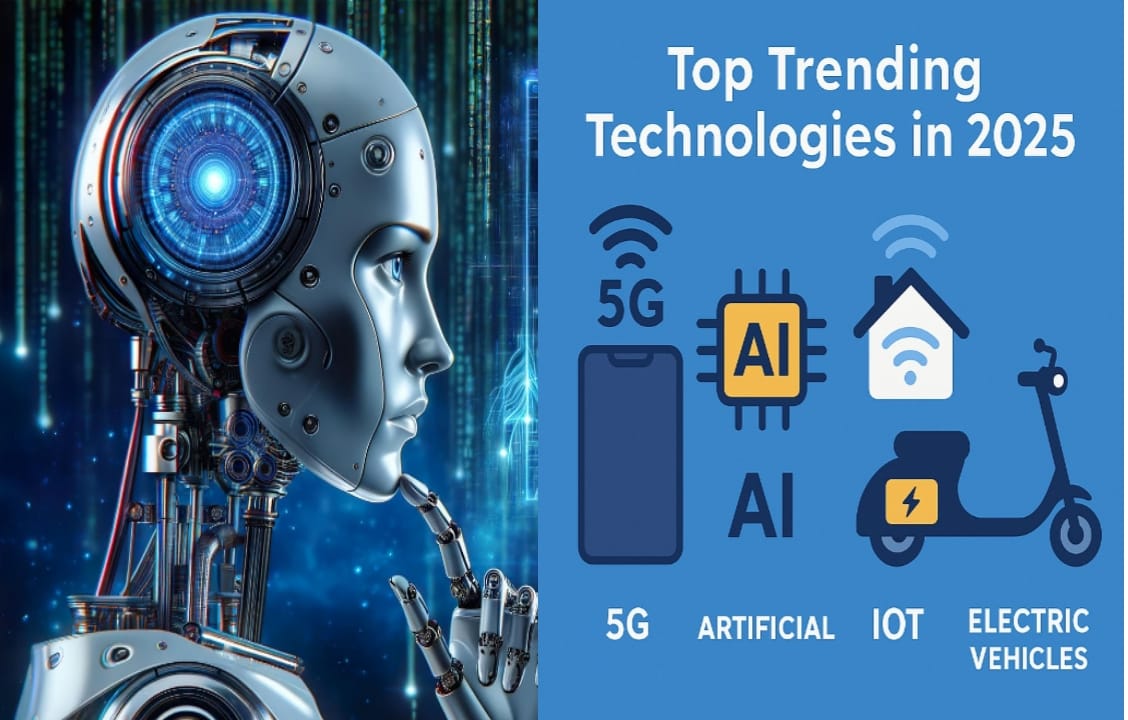
1. The 5G Smartphone Explosion in India
Market Uptake & Pricing Trends
India’s Q1 2025 smartphone shipments declined by 7% year-on-year, yet 5G smart phone adoption soared—dominating 86% of all shipments, up roughly 14% YoY. Particularly in the sub-INR 8,000–13,000 (~$100–160) range, 5G devices saw over 100% YoY growth
Brand Share and Consumer Demand
Leading brands are capturing this wave: Vivo holds 21% market share, Samsung follows with 19%, and other players like Xiaomi, POCO, Motorola, and Realme are contributing heavily to affordable 5G adoption Despite a slower overall market, growing 5G demand reflects rising consumer awareness and preference.
Infrastructure & Carrier Bundles
Telecom companies are working in tandem—e.g., Vodafone–Idea’s bundled data and video subscriptions with devices like Vivo V50e aim to accelerate adoption . Equipment makers like HFCL forecast 25–30% revenue growth in FY26, driven by 5G infrastructure orders .
2. Electric Scooters: Smarter, Safer, Greener
Mass Adoption & E‑mobility Push
India’s e‑scooter market continues to pivot from novelty to necessity. Leading the charge is the Ather Rizta—available since April 2024, it features modern connectivity, long-range batteries, and smart displays.E‑scooters aren’t just about transport—they symbolize a shift to cleaner urban mobility.
AI-Based Safety Innovations
Research in AI-powered obstacle detection for scooters shows promise—systems using cameras and sensors can identify road hazards like potholes, tree debris, or manholes in real-time, signaling a new era of safe micro-mobility Studies also find that rider confidence rises dramatically when AI enhances scooter safety .
3. Artificial Intelligence: From Chatbots to Device Integration
Device-Level Integration
AI has transcended software—it now lives inside our devices. At MWC 2025, smartphones and laptops showcased built-in AI: Xiaomi’s 15 Ultra includes HyperOS with AI, and Asus released AI-powered Vivobook laptops in India for creators and students.
Business & Industry Trends
By 2025, over 65% of businesses actively use generative AI tool.Trending AI applications include conversational AI (chatbots), predictive analytics in industries like manufacturing and finance, and explainable AI—the kind businesses understand and trust
Future smartphones will leverage AI for real-time translation, camera enhancements, voice assistants, and optimized battery management. The focus will shift from raw specs to smart, context-aware user experiences .
4. Internet of Things: Connecting Everything
Ubiquitous Connectivity
IoT is quietly reshaping urban and industrial landscapes. The global IoT market is projected to exceed $1.6 trillion by 2025 . Enteprises are embedding sensors in workplaces, homes, and cities—especially with energy-efficient and AI-driven task automation
Smartphones as IoT Hubs
Your phone now acts as a control center—from connected refrigerators and wearables to smart cars . IoT apps let users manage thermostats, security systems, and even vehicles in real time—a trend set for rapid expansion.
Smart Cities on the Rise
Cities are integrating AI + IoT for better traffic, utilities, and public safety management. Pilot programs show promising outcomes in energy optimization and emergency response .
5. Advanced Cameras & AI‑Driven Laptops
Flagship Camera Powerhouses
Smartphones like the Vivo X200 and Samsung Galaxy A26 5G emphasize superb cameras, including periscope lenses, OIS, and 50MP sensors Xiaomi’s 15 Ultra specifically caters to photo enthusiasts with camera module add-ons
AI-Laptop Combo
Laptops, too, are evolving. Asus’s AI-powered Vivobook S series in India delivers enhanced performance and thin-and-light design—ideal for productivity and content creation .The AI feature revolution extends well beyond smartphones.
